
The Ultimate Restaurant Audio Guide
Designing an acoustic environment that keeps diners ordering another round.
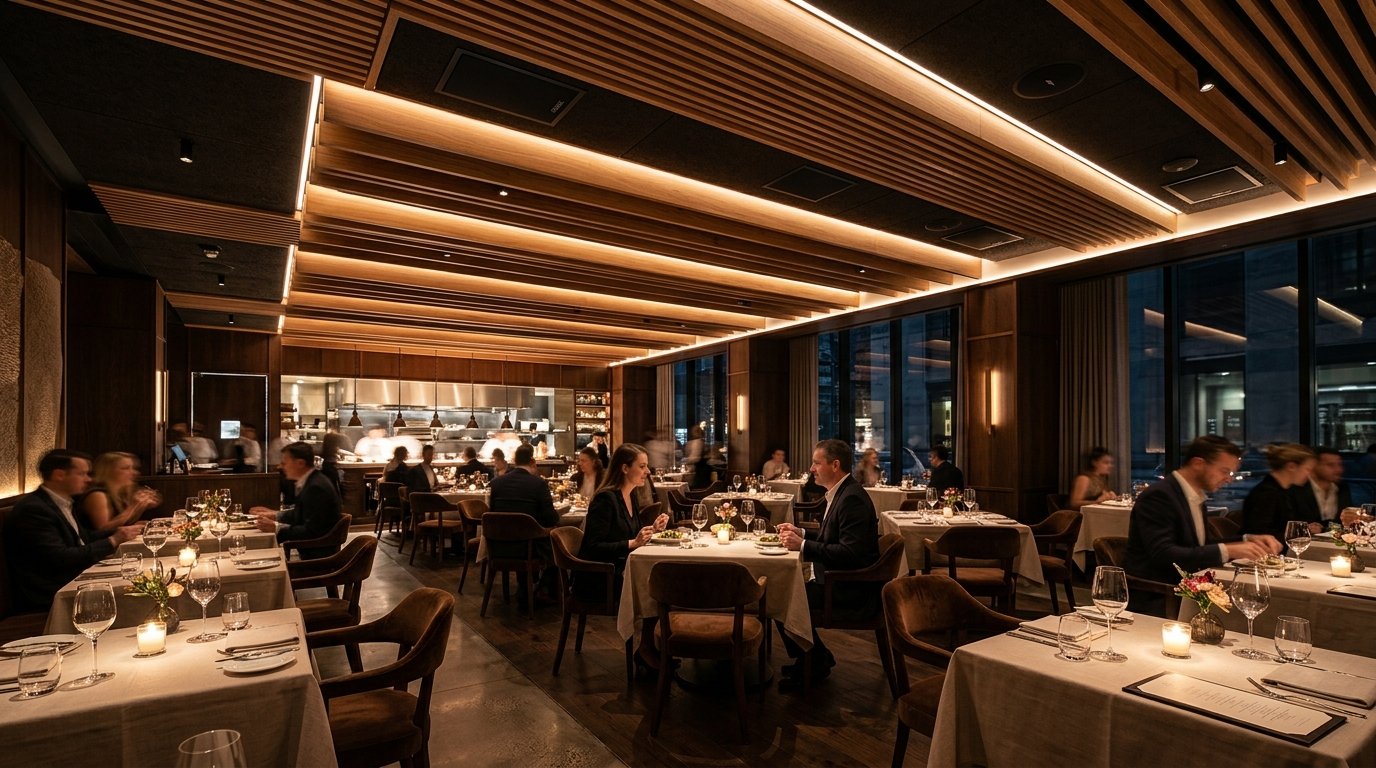
Why Restaurant Audio Fails
You've likely experienced it: A beautifully designed restaurant where you have to scream across the table to be heard over clattering silverware and harsh, tinny music. This is a failure of both acoustic design and audio integration.
1. Foreground vs. Background Audio
Most restaurants make the mistake of buying "Foreground" speakers (designed for loud, direct listening) and playing them quietly. This results in thin, lifeless sound. A proper "Background Music" (BGM) system uses specialized speakers that provide rich, full-range frequency response even at whisper-quiet volumes.
2. The Acoustic Treatment Factor
Modern restaurant design favors hard surfaces: concrete floors, glass walls, and exposed ceilings. These surfaces reflect sound waves endlessly, creating a harsh echo chamber.
Before installing a single speaker, a venue must be acoustically treated. We integrate architectural acoustic baffles, invisible ceiling absorbers, and textured wall treatments that absorb rogue frequencies without ruining the interior designer's vision.
3. Zoned Control
The bar area should not be the same volume as the intimate corner booths. A professional multi-zone system allows management to independently control the volume and playlist for the bar, dining room, patio, and washrooms from a single iPad.
Ready to upgrade your dining experience?
Contact LanceTech to design a bespoke audio system that matches the quality of your menu.
Speak to a Consultant